

July Spice Club: English Thyme
Thyme is a culinary herb native to Eurasia and the Levant. The word thyme refers to all plants in the genus Thymus, which is a part of the mint family.
The ancient world loved thyme. The ancient Greeks believed thyme was a source of courage and added it to their baths and burned it as incense in their temples. Common thyme was a part of the Ancient Egyptian embalming process, and the Romans used thyme to flavor their cheeses and alcohols.
During the Middle Ages, women gave knights bouquets containing thyme for courage, and people placed the herb under their pillows to ward off nightmares. At this time, thyme was still burned as incense, especially at funerals.
Throughout history, thymes were used as antibiotics and antiseptics. Some believe that thyme essential oil can help with respiratory issues. Korean Ullengdo thyme tea has high levels of thymol, an oil with anti-inflammatory benefits. Today, you might encounter thymol in certain mouthwashes.
Of course, thyme is also eaten. English thyme, also known as garden thyme or Mediterranean thyme, is the most common variety and is what you’re most likely to encounter in dried form. Thyme was often part of the French bouquet garni, or garnished bouquet, a bundle of herbs tied together and used to flavor soups and stews. Herbs de Provence, a French herb mix created in the 1970s, also contains thyme.
RECIPES
Paella originates from Valencia, a city on the Eastern coast of Spain. The name paella is actually Valencian for pan and Catalan for frying pan. A traditional paella includes rabbit, chicken, duck, and snails, although there are also seafood and livestock versions.
This vegetarian paella is packed with spices, including multiple kinds of paprika and saffron. If you don’t have a paella pan, you can use a skillet or a Dutch oven. Avoid anything with a nonstick coating, as you want a nice socarrat (layer of caramelized rice) to form on the bottom of the pan.
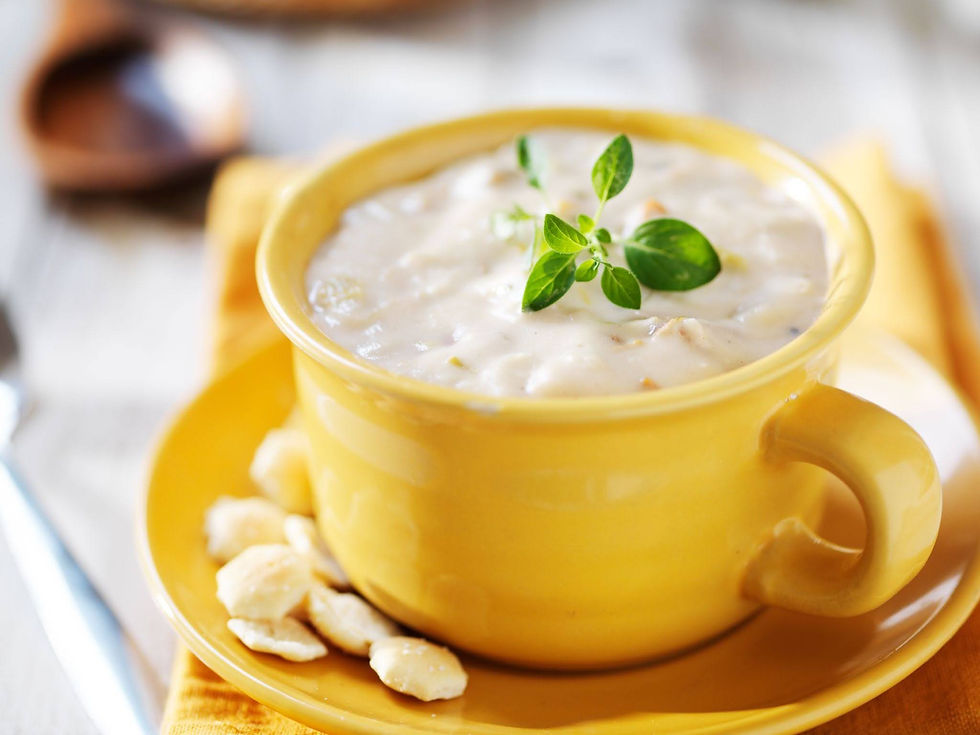
Or perhaps you want to save your Dutch oven to make this clam chowder. Just don’t forget the oyster crackers!
Today’s blog post was written by Caroline Shaltz Toplanaj, librarian at RHPL.

